Like the native Indians in the US and the Aboriginal peoples in Australia, New Zealand has its own indigenous population called the Māori. Māori originated with settlers from eastern Polynesia, who arrived in New Zealand in several waves of canoe between roughly 1320 and 1350. Europeans in New Zealand in the 17th century and brought enormous changes to the Māori way of life.
While visiting New Zealand, we were impressed to see how well the Māori culture is integrated into contemporary Kiwi life. Here are some of our observations and learnings!
1. Immersive bilingualism is implemented nationally. You’ll find most signs in both English and Māori.
Māori language is also known as te Reo Māori. It is one of the three official languages in New Zealand: English, Māori, and New Zealand Sign Language. Most government departments and agencies have bilingual names. Most preschools teach basics such as colors, numbers, and greetings in Māori.
Throughout our road trip across the country, we saw most signs in both languages. Many tourist sights have Māori names which are a little difficult for us to remember at first, but we were learning throughout the trip!
Here we are, learning about the “Waiotapu (Sacred Water) in Māori.

2. Haka a traditional Māori performance art that remains popular today.
The haka was originally performed when warriors tribes met for peaceful purposes. They use facial gestures and fighting moves to show their readiness to defend themselves in case the other group wanted to fight.
Today, there are haka groups in schools, workplaces, and tourist venues across the country. There’s also a biennial competition at the Te Matatini National Festival. And of course the famous Haka dance before their rugby matches!
We had the opportunity to go to Māori village and experience Haka! FIFI and NONO both learned some moves for our next fight!


3. Māori’s traditional food “hangi” is cooked underground for hours!
Hangi is a traditional Māori cooking method using heated rocks buried in a pit oven. Traditionally, they wrapped the ingredients in leaves, but nowadays aluminum foil and wire baskets are commonly used. Food varieties include chicken, fish, muttons, beef, and various vegetables. They stay underground for hours until the meat is so tender and off the bone, infused with a smoky, earthy fragrance!
This is not something we could make at home! So we had to stuff ourselves to all the hangi we could stomach!


4. Ta moko – Māori tattoo is sacred and purposeful.
During our visit to the Māori villages, we were amazed by the fascinating and distinct tattoos, especially on their faces. In Māori culture, each tattoo is unique, containing ancestral messages of the wearer’s family, tribes, and social standing.
Unlike modern tattoos which are mostly an expression of style, it’s the identity of Māori people.
“Ta moko today is much more than a fashion statement, a passing fad for Māori. It is about who we are, and whom we come from. It is about where we are going, and how we choose to get there. And it is about for always, forever.”
— Dr Ngahuia Te Awekotuku
How cool! FIFI needs to ask NONO to put her name on his face.

5. Māori people are encouraged to tell their own stories across the world.
New Zealand is a natural wonderland, Māori maintains a spiritual connection and harmony with the environment. With the arrival of European settlers, there have been disputes, social upheaval, introduced diseases and inequality, but the New Zealand government has been introducing socio-economic initiatives to bridge the gap between Māori and other New Zealanders. We felt the balance, harmony, and integration.
Throughout all the scenic and historical sights we visited, we loved to see so many Māori guides telling their own tales and legends, the stories of their great grandfathers, their land, their home. It felt intimate and authentic.
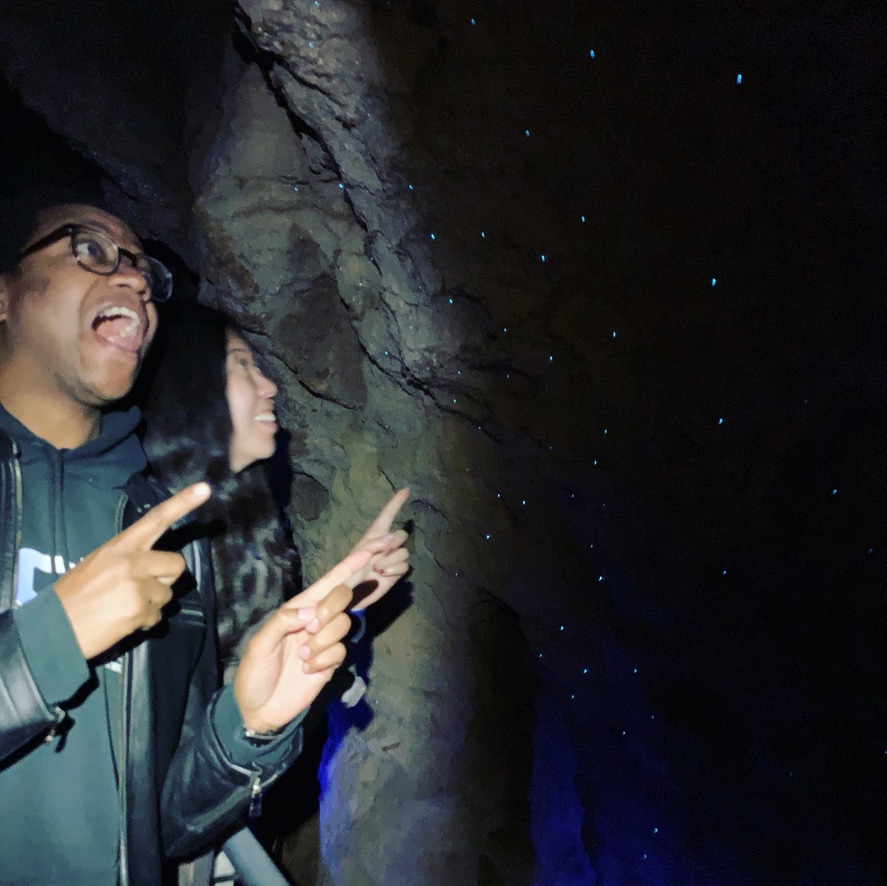
Here we are at Waitomo glowworm caves! Listening to our Māori guide while counting the “stars”!

Conclusion:
Many countries have been struggling to balance their relationship with indigenous peoples. Too many atrocious deeds have been done to the original or earliest known inhabitants of a land. More progress needs to be done from the government, and also from us to respect, learn, and support their culture. New Zealand has taught us a lesson.
What is your view on indigenous culture? What other travel stories would you be interested in? Leave a comment!



 FIFINONO - a blog about cultural exploration
Leave a comment