
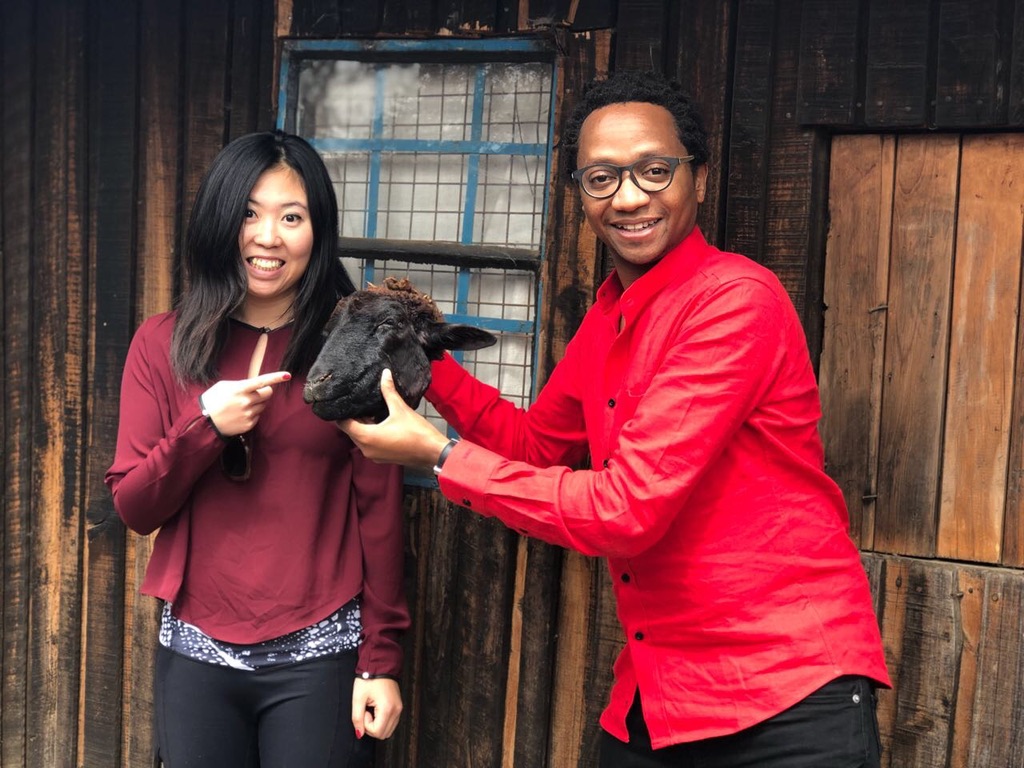
Today we bring you the story of Jane and Tamer!
The beginning of their story is totally a “Hollywood hopelessly romantic love-at-first-sight scene”, and FIFINONO were there to witness it!
Jane and Tamer met on a sidewalk in Hong Kong, March 2015. Tamer was sitting at an outside table, and Jane stopped in front of him to check her phone.
“Excuse me,” he said. “I just want to say you have beautiful eyes.”
She looked at him and said, “Your eyes are beautiful too.”
Then they felt in love like magic, from that first chance encounter and ever after! Even Jane never believed in love-at-first-sight until it happened to her!
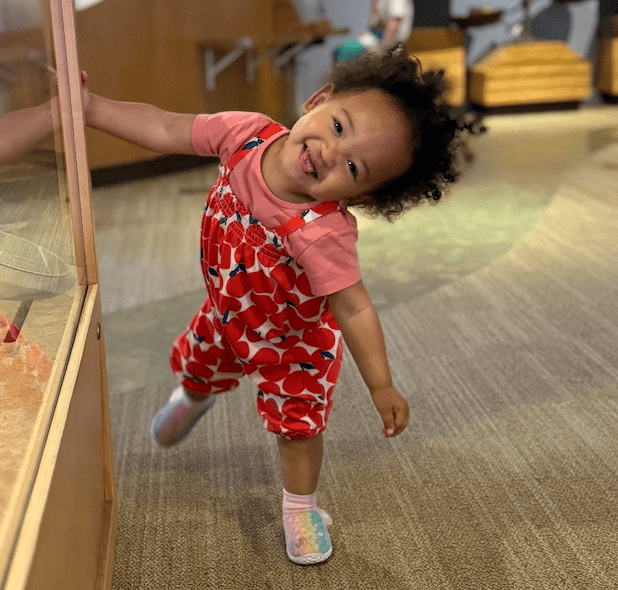
Jane is from the US and Tamer is from Turkey, now they live in Turkey together with their beautiful daughters. FIFINONO had an interview with them to learn how cultural difference impacts their lives.
What perceptions did you have of their culture? Did they live up to it?
Jane: I had the perception that the Turkish are quite strong and proud. They have an important and strategic role in both ancient and modern history, as well as in current events. They boast both the glories of the Ottoman Empire, and the secular, democratic achievements of Ataturk – the latter nearly a cult-of-personality. The Turkish government can be ethnocentric and xenophobic – Tamer, thankfully, is not.
Tamer: I had the same stereotypical views of America as others have- that they’re loud and arrogant. It’s still true, but also they are so open and true to themselves- they don’t really hold anything back. I was surprised with their family relationships; I didn’t realize they were so close.
Have you had arguments or misunderstanding due to cultural differences?
Jane: Americans are fiercely independent and self-reliant. The Turkish are communal. They greet each other as “sister, brother…” I have not adjusted to this sort of, “everyone’s included” approach while Tamer has difficulty understanding my practice of “doing things myself.”
Tamer: Very few. We sometimes have a difference of opinion regarding childcare. Americans are very loose, and give more freedom to children, but it seems to be a good thing. Turkish parents want to control everything.
Is there anything cultural your partner does that you like or dislike?
Jane: Turkey has perhaps the best service anywhere; the hospitality of the Middle East with the refinements of Europe. Additionally, Turkish people are very self-conscious about their personal appearance, and are committed to a high standard of grooming and presentation. I’m proud that Tamer always puts his best foot forward, so to speak, with everyone he meets.
Turkish business practice falls a bit behind the global standard for sense-of-urgency. I say it takes 3 hours and 10 cups of tea into a meeting before they actually discuss the meeting itself. As a person who appreciates efficiency, this can be difficult for me to reconcile.
Tamer: I really like Jane’s sharp American humor. There is intellect behind it; a lot of referenced jokes- for example history or literature or art, film, or music quotes –a lot of trivia, it’s amazing what she knows. As she said about business, we Turks like to take our time and build relationships. Americans are very direct and to the point. For us, the tea is important. For Americans, it’s a waste of time.
Is there anything in your partner’s culture that you also have started doing?
Jane: Food culture is very important here- I’ve learned a lot of new recipes.
Tamer: Holiday celebrations and decorations. Maybe it’s a commercial tactic, but there are decorations for every holiday, and there are a lot of holidays. It’s a lot of fun though, especially with our children..
What are some of the products that you didn’t know your partner uses?
Jane: One of the products used here is perfumed alcohol – traditionally offered to guests and poured quite liberally everywhere you go – this has worked out well during Covid as it’s over 70% alcohol and anti-bacterial.
Tamer: Drinking milk at dinner was very strange for me. We rarely drink it; sometimes for breakfast, and rarely past childhood age
ON FOOD
What food does your partner eat a lot from their culture?
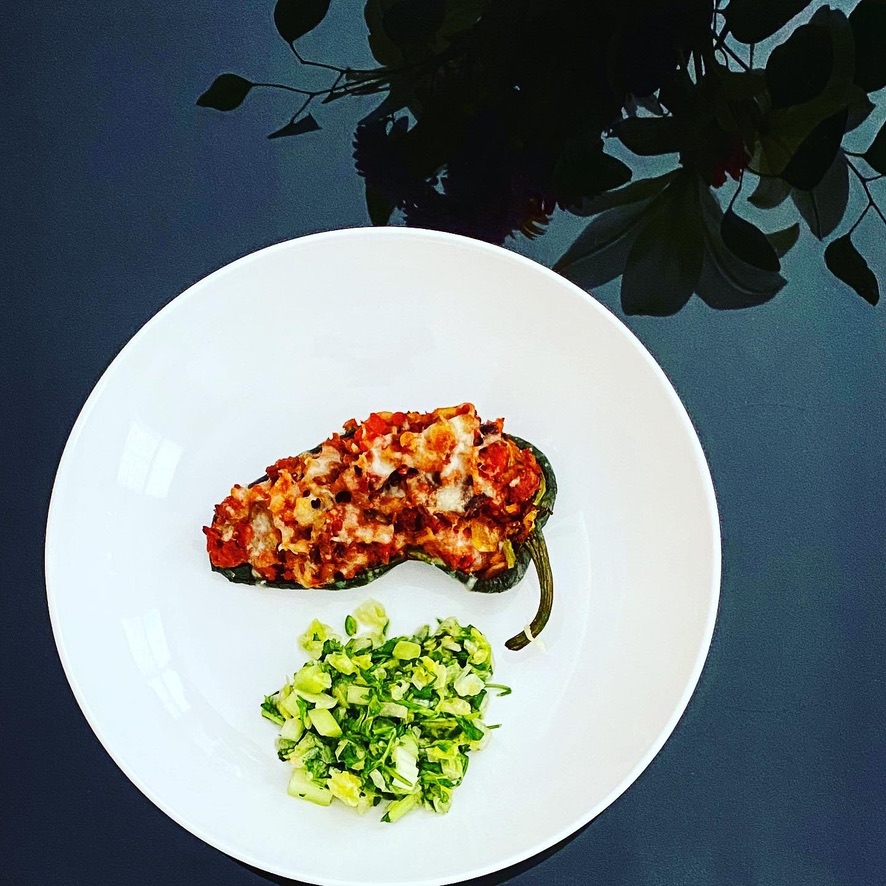
Jane: Kebab, kebab, and more kebab. Tamer’s home city Gaziantep is the gastronomical capital of Turkey, and home of kebab. He could eat it all day, every day.
Tamer: JUNK! She loves fast food and snacks. I never knew there were so many kinds of chips and chocolates and candies.
What food do you love from your partner’s culture?
Jane: It’s no secret that Turkish food is NOT my favorite cuisine, but I do particularly like lentil soup, “Mercimek Corbasi,” and doner meat wraps.
Tamer: Biscuits and gravy, dry-rub pork ribs, bagels… Also, I can’t lie, I enjoy the snacks too.
What food from your partner’s culture is weird to you?
Jane: Yogurt. Yogurt based soups, sauces, cold and hot mezze small plates, marinades, main dishes, side dishes, snacks. Plain, salty-sour Yogurt everything.
Tamer: It was weird to me that I couldn’t find any plain yogurt! It’s also weird and totally disgusting the amount of sugary, salty, processed, and artificial food Americans eat.
Is there any food in your culture that’s similar to your partner’s?
Jane: It’s been argued that Americans are lacking in culture, but on the contrary, I feel we are an adopter of many cultures. For food, I’ve noticed that a lot of the ingredients in Turkish recipes are similar to Mexican cuisine.
Tamer: I’m sorry but no. We only eat fresh, healthy food.
ON LANGUAGE
What cute phrases have you learned from your partner’s language?
Jane: “Esek esol esek.” Donkey, son of a donkey. It is, of course, an insult.
Tamer: Dude, Bro, Yo.
What are the words/phrases your partner always says in their language?
Jane: Canim, prounounced “janum,” meaning, “my dear.”
Tamer: My Love.
ON ENTERTAINMENT
Do you listen to music from your partner’s culture? Do you have a favorite song?
Jane: I enjoy the old, traditional music. From the Ottoman Empire, there is a song called “Uskudara Giderken” which I absolutely love.
Tamer: Jane loves old-school rap and hip-hop. I know nothing about that music. I do like Bluegrass music from the part of America where her family is from.
What festivals in your partner’s culture do you celebrate together?
Jane: People in Turkey love a good wedding. It’s a week-long affair.
Tamer: So many holidays. Halloween, Christmas, Valentines, Easter, I think maybe there is one per month?
What children’s tales are important in your culture?
Jane: Virtue-stories. Aesop’s fables, for example. Bible stories. Tales about honesty, kindness, helpfulness, etc.
Tamer: Most of our stories are based on respect and kindness
ON PARENTS
Have you met your partner’s parents? Did you have any concerns about meeting them?
Jane: Yes, they are lovely people. I hoped of course they would like me.
Tamer: Yes they are the best. There is no difference between them and my own parents
Did your partner’s parents do anything that surprised you?
Jane: In Turkey, parents remain very involved in their children’s adult lives. I’ve heard other foreign spouses express concerns over this, but my in-laws have been very respecting of the boundaries of our marriage, for which I’m grateful.
Tamer: They treat me just like their own son, which makes me feel so comfortable and loved. I do have a funny story however; I nearly wet my pants when Jane’s father showed me his gigantic gun collection, and gave me a huge Smith & Wesson as a present. Totally American!
FINAL WORDS:
What is the best part of being in a cross-cultural relationship?
We have daughters; it is our responsibility as both parents and egalitarian global citizens to expose them to the world in all its variants and teach them to respect and value the similarities and differences therein. Having a cross-cultural relationship is great because they are seeing it organically in their own home.
Has this relationship changed you? How?
Jane: Yes and no. I’m the same person I’ve always been- but Tamer makes me better. I think that’s important for any person who commits to a relationship; it shouldn’t feel like fighting against a current. I’ve changed because I’m no longer a party-of-one. I don’t really make a lot of decisions or take actions for myself as an individual. It’s always ‘We,’ and ‘Us,’ and ‘Ours.’ I’m not saying I’ve lost my sense of identity- what I am saying is that I identify myself as a partner with Tamer. We’re in it together.
Tamer: Yes, in a good way. I learned what it means to be truly loved, and to truly love in return.
FIFINONO Notes:
Jane and Tamer’s story is like a fairy tale, but like any relationships, there are hurdles. Leaving family and friends and moving to a completely different culture is never easy. Foreign language, foreign food, foreign customs… everything requires extra efforts. But their magical love and strong relationship make everything worth it. And like Jane said, they are now in it together.
Their kids are born global citizens, and from a very early age, learn from their parents to respect and value cultural similarities and differences. And we know, this will make the world a more empathetic, inclusive, and harmonious place for all of us.
FIFINONO Culture Learning:
Turkish Wedding Shoe-Signing Tradition:
This Turkish wedding tradition has been practiced for generations. It has the same meaning as throwing the bouquet. The bride’s friends write their name on the sole of her shoes. Whosever name rubs off by the end of the night, they will get married!
FIFI and NONO find this so interesting! What wedding traditions do you have in your cultures?
Are you in a cross-cultural relationship? Would you like to share with us your stories, learnings, and tips? Would you like to have your couple sketching on our website?




 FIFINONO - a blog about cultural exploration
Leave a comment