Morocco is a country full of stories. Over the centuries, it has woven its ties to sub-Saharan Africa, Europe, and the wider Middle East into a whole piece of unique art. I miss the days dragging our luggage in the Medinas, getting lost in the Souk, and walking around the town looking for alcohol, I meant historical and cultural stuff of course!


Marrakech
Marrakesh, a former imperial city in western Morocco, is a major economic center and home to mosques, palaces and gardens. Marrakesh’s heady sights and sounds will dazzle, frazzle and enchant.
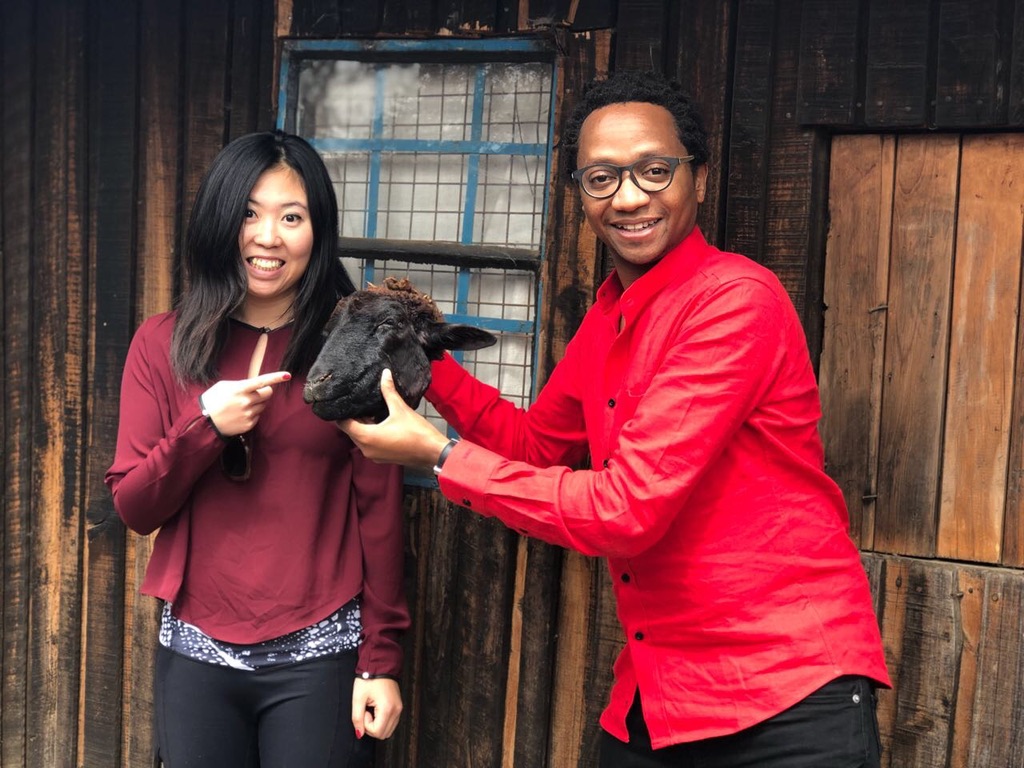
Walking into Djemaa el-Fna in Marrakech, I was immediately overwhelmed by the mix of color, scents, sight, and sounds – a complete sensory overload. The square gradually cooled down as the sun reluctantly disappeared, the last sun rays added a pink layer over the market. Snake charmers, magicians, storytellers, and Chleu hustled the tourists as they passed by. We stopped by the aromatic food stalls, choosing between the tantalizing tagine and funky sheep heads. Locals gathered in the plaza, watching the performers and playing the old-fashioned games in the open air. It somehow reminded me of my childhood, when we had no TV, smartphones, or internet, getting our hands dirty playing on the ground.


El Jadida
Continuing driving, we reached El Jadida – a port city on the Atlantic coast, located 100 km south of the city of Casablanca. As the gateway to Africa, Morocco is full of dazzling diversity. Shadows of Europe can be found in each corner, blended with the exotic Moroccan fair. El Jadida is a charming representation of Cité Portugaise. Another super shortstop, we took a promenade through the ancient Mazagan fortress, entered the mysterious Cistern, and watched dozens of Moroccan families chilling on the beach.


Casablanca
“But what about us?”
“We’ll always have Paris…. here’s looking at you, kid…”
As we drove through Casablanca, the heart-wrenching parting scene of the film flashed back. When Ilsa gazed into Rick’s eyes and asked,
Love in the film is so intense, almost palpable and still gives me chills. Romance is dripping in every part of the movie Casablanca, but the city itself is nothing like the fantasy fabricated by Hollywood. She’s not alluring as other parts of Moroccan, but modern, commercial, and hustling, a big financial center and touristic harbor, a reminder of urbanization and cultural invasion in an exotic empire.
We stopped by Hassan II Mosque, towering by the ocean overlooking the entire city. Designed by French architect Michel Pinseau, it combined the Moroccan artisanship and French sophistication and refinement, hand-carved stone and wood, exquisite ceramic tiling, intricate marble flooring, and the elegant but never used hammam displayed for tourists. A lavishing and grandeur masterpiece commemorating the king’s power.


Rabat
Rabat, Morocco’s capital, rests along the shores of the Bouregreg River and the Atlantic Ocean. It’s known for landmarks that speak to its Islamic and French-colonial heritage, including the Kasbah of the Udayas.
As the group rushed to the Rabat Hash, I decided to take an afternoon off from the shenanigans and explore the capital Morocco. After roaming through the Medina, passing the palm tree-filled boulevard, and admiring the picturesque fortress Kasbah of the Oudaias, I ordered myself some wine at Le Dhow, an old ship restaurant by the sea, watching locals jumping into the water from the quay.


Fes
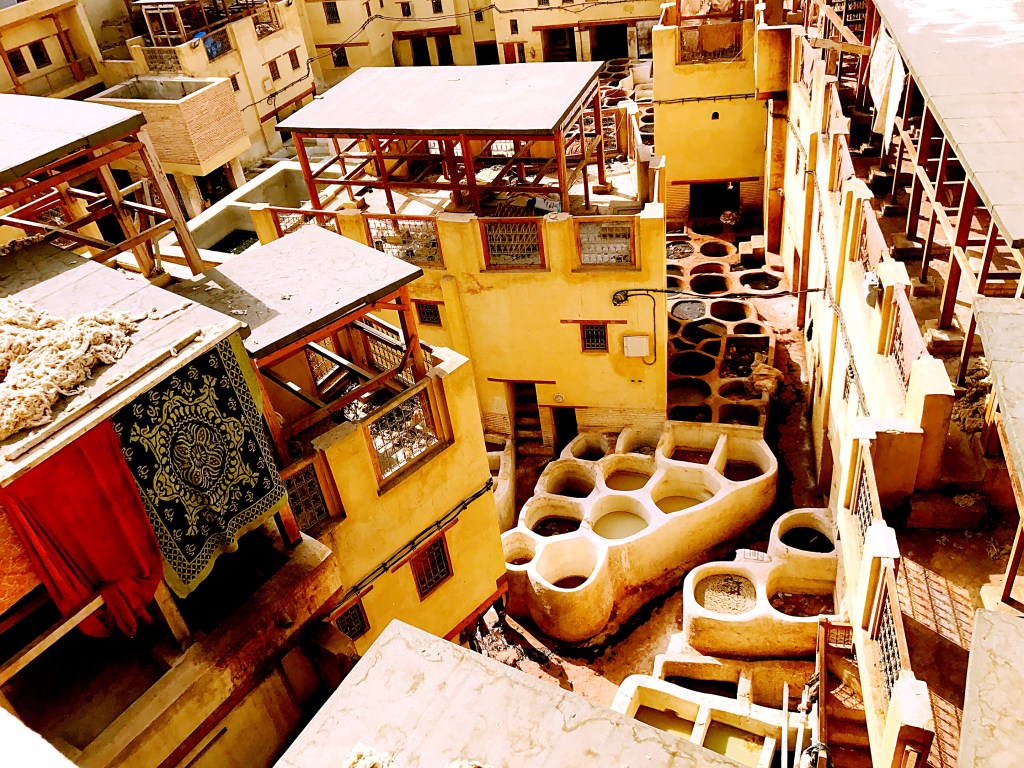
Fes is a northeastern Moroccan city often referred to as the country’s cultural capital. It’s primarily known for its Fes El Bali walled medina, with medieval Marinid architecture, vibrant souks, and old-world atmosphere. Fes is supposed to be the largest car-free urban area. Thousands of dark and narrow alleys led us from one surprise to another, overwhelming the guests with its aromas, colors, and noises. We walked through the maze to find the infamous Tanneries. Fresh mint leaves were handed to us to cover the intense smell of pigeon poops – which contain ammonia that could soften the hides. Nothing but tanners’ bare feet and hands are used for the final dying, a process barely changed since medieval times.


The heat of Fez is almost unbearable. Lying in our dorm bed with a broken air-conditioning, I felt the sheet is soaked with my sweat the entire night. I got out during the dawn for some fresh air, discovering my body covered in small, red welts. Ignoring them, I never thought it would turn out to be the worst bed-bug epidemic I’ve ever encountered.
Chefchaouen
Chefchaouen is in the Rif Mountains of northwest Morocco. It’s known for the striking, blue-washed buildings of its old town. Leather and weaving workshops line its steep cobbled lanes. Driving on, I spotted the bright blued covered village in the Rif Mountains from afar. No one is really sure why Chefchaouen is covered in this fairy-tale-like color. Some say that blue symbolizes the sky and heaven, and serves as a reminder to lead a spiritual life when the Jews moved here in the 1930s; the less romantic theory is that the blue keeps mosquitos away. Either way, the fifty shades of blue added a unique charm and mystery to this town, making it one of the most popular destinations in Morocco. For us, it was another short visit just enough to have a glimpse of her unique beauty. 


Tangier & Gibraltar
Tangier port is on the Strait of Gibraltar, it has been a strategic gateway between Africa and Europe since Phoenician times. We could spot Spanish influence everywhere. We ended our Morocco trip with a little celebration, stuffing ourselves with tapas and a little bit too much wine. The next morning we ferried to Algeciras and spent a lovely afternoon in Gibraltar, hiking in the mountains filled with aggressive apes and embracing the slice of Britishness in Spain. After one night in Malaga with some tantalizing tapas and refreshing Sangria, we finally reunited with the rest 60 Shanghai hashers to invade the tranquil photogenic Traben-Trarbach.
Because of the time limit, our trip to Morrocco felt a little rushed. But the intense impact on my all senses will linger for a long time. And as Edith Wharton said “To visit Morocco is still like turning the pages of some illuminated Persian manuscript all embroidered with bright shapes and subtle lines.”

 FIFINONO - a blog about cultural exploration
Leave a comment